The 24-25 English Premier League (EPL) saw the Liverpool reds be crowned champions. Having won over 50% of their games, scored 69 goals, and accumulated 84 points, we’ll look at the path that led the team to this milestone.
Liverpool's 24-25
Domestic Dominance

By Stefano Salame

The Climb
21-22 Season
The standard set this season was incredible. The team played all 63 games of the calendar, performed in four major European competitions (EPL, UEFA Champions League, FA Cup, Carabao Cup), and was never out of contention for any until the final week of May. While the domestic cup double was secured, the season ended with the bitter taste of "what if", having lost the league by a single point and the European Cup by a goal. Some call it the season that never was.
22-23 Season
After the amazing effort the year before, the squad looked a bit disillusioned. The midfield lacked its sharpness, which was a major contributing factor to the club dropping out of the top four, with 67 points. The pace this year was proof that what got the team this far, wouldn't take them further anymore. The only real benefit was the late season tactical tweak that saw Trent Alexander-Arnold move into midfield, showing some promise for seasons to come.
23-24 Season
This was a year of change. The team brought in some new, younger players to replace older ones. It was also the final year for legendary manager Jürgen Klopp. Regardless of all the changes made, the team managed to adapt fairly quickly, staying near the top of the standings for most of the year. Though losing the league, the squad proved that this new version of Liverpool was fast, exciting, and ready to compete for the top again.
24-25 Season
Finally, everything clicked. While Arsenal led the race for the first seven months, Liverpool stayed composed and waited for their moment. In February, the opportunity arose. As Arsenal entered a four-game drought, Liverpool went on a winning streak that got them the lead. They officially won the championship a month before the season even ended, in April, and were recognized as the best team in England for a 20th time.

The Strategy
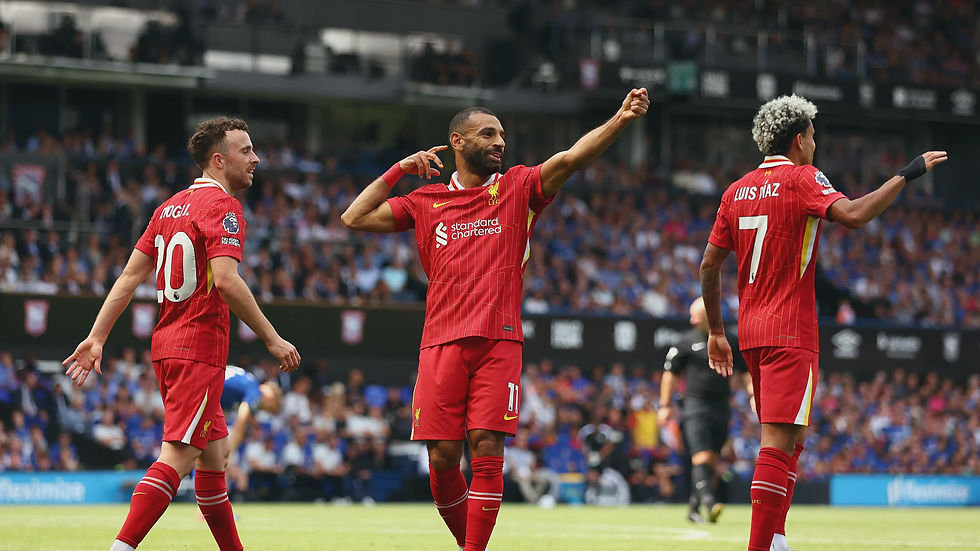
The strategy behind the title win was defined by a shift from chaos to tactical control. Under Arne Slot, the team moved away from constant sprinting and instead focused on a more patient, possession-based game that forced opponents to break their formation. In having a more defensive midfield, Liverpool became difficult to counterattack. This disciplined approach allowed the team to manage their energy levels better than previous years, which was key to their dominance in the second half of the season. While opponents like Arsenal began to look fatigued and lost points in February, Liverpool remained sharp, using a more calculated pressing game (plus some Mo Salah brilliance) to capitalize on mistakes and win games with efficiency rather than shot volume. This shift from explosive chaos to composed endurance pushed Liverpool to the other side, marking what felt like the beginning of an era.

The Luck
In a title race this tight, you need things to go your way, and Liverpool definitely benefited from a serious injury crisis that crippled their rivals. While Liverpool stayed very healthy under Arne Slot, Arsenal’s season hit a wall when they lost their entire "spine." Their captain, Martin Ødegaard, was out with a knee injury, their best defender, Gabriel Magalhães, was ruled out for the season, and even Bukayo Saka was forced to play through chronic pain before eventually needing surgery.
Looking at the figure below, this "luck" explains the massive gap that opened up in the spring. Arsenal actually lost the exact same percentage of games as Liverpool (10.5%), but without their creative stars and defensive anchors, they couldn't turn ties into wins. Instead, they got stuck drawing nearly 37% of their matches, which imposed a mathematical ceiling they simply couldn't break through. Liverpool took full advantage of this stability, keeping their lead as their main rivals lacked the health and stamina needed to close the gap in the final months.


About This Page
Raw data were collected from the EPL website under the statistics tab. All datasets used were created using SQL by GitHub user Sanan Muzaffarov under the title 'EPL 2024-25 Season Analysis'. Visualizations were created using Rstudio and Adobe Illustrator.